

Exercise Physiology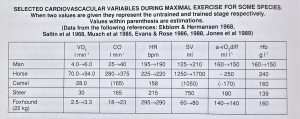
The causes of low performance of Racing Camels compared to other athletic animals like Horses:

1- Hear Rate (HR):
The increase of HR from rest to exercise (trotting 5:6 m/sec) reach to double rate compared to triple rate in the racing Horse.
ECG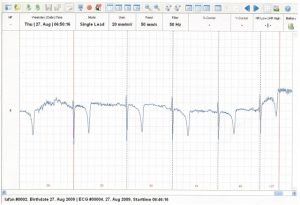
The racing camels sometimes show atrial fibrilation during extreme exercise.

2- RBC & PCV:
No significant increase in the RBC, PCV and other hematological parameters and blood stock volume generally compared to Horses because there is no significant Spleenic contraction during exercise as in racing Horses.
this not make increase in blood Oxygen supply to the muscles and so accelerate the an-aerobic oxidation.
3- Skeletal Muscle fibrils:
70% of type 1 compared to 12% in Thoroughbread Horses.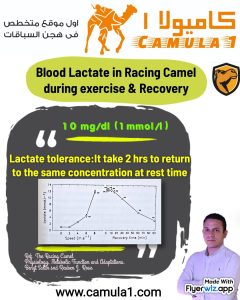
Decrease in Glycogen storage in racing Camels 55% less than Standardbread Horses and also decrease in Glyconenolysis and Glycolysis metabolic enzymes.

The high LDH enzymes equal nearly 3 times concentration in Stabdardbread Horses. The nature of muscle metabolism more close to produce Lactate that accelerate the muscle fatigue.
4- Blood and Muscle buffer mechanism:
There is no significant changes in blood electrolytes compared to Horses.
The concentration of other anti-oxidant and buffering substances are relatively small.
5- Anatomy & Gait:
The anatomical feature of Camel with relatively long up-ward neck and long legs with hump over back bone, all these features did not help the racing camel to keep the speed rate for long time.
The long up-ward neck did not helps an easy flow of Oxygenated blood to the brain.
The gait of camel shows big difference from rest to trotting and then to galloping. the Camels are more adapting to gait at rest to the other gaits of trotting and galloping.
Contact me:
medhat.elshemy@gmail.com


